
In this guide
- First: What Is a Global Airline Alliance?
- What PAL Brings to the Table
- What Filipinos Gain
- What’s in It for the Other Airlines and Countries
- How Oneworld Membership Actually Works: The Timeline
- How to Start Maximizing This as a Filipino Traveler
- Connecting Flights: What Changes in Practice
- What to Watch For
- Frequently asked questions
On June 6, 2026, at the International Air Transport Association’s Annual General Meeting in Rio de Janeiro, Philippine Airlines officially signed a Memorandum of Understanding to join the Oneworld Alliance. This makes PAL the 16th member of one of the world’s three major airline alliances, and only the second full-member carrier based in Southeast Asia.
If you fly PAL regularly, collect Mabuhay Miles, or travel internationally from the Philippines, this matters to you. Here’s what it means, what you stand to gain, and how to start making the most of it.
First: What Is a Global Airline Alliance?
An airline alliance is a partnership where member airlines agree to work together on routes, frequent flyer programs, and passenger perks. There are three major ones: Star Alliance (the largest), SkyTeam, and Oneworld.
Think of it this way. When you fly from Manila to Tokyo on PAL, then connect to London on British Airways, and then onward to New York on American Airlines. An alliance makes that journey feel like one trip. Your luggage gets checked through. Your status is recognized at each airline. You earn miles on every leg. And at big international hubs, you can access the same lounges regardless of which member airline you’re flying.
The Oneworld Alliance currently brings together 15 airlines: Alaska Airlines, American Airlines, British Airways, Cathay Pacific, Fiji Airways, Finnair, Iberia, Japan Airlines, Malaysia Airlines, Oman Air, Qantas, Qatar Airways, Royal Air Maroc, Royal Jordanian, and SriLankan Airlines. Together, they cover nearly 1,000 destinations in over 170 countries and territories.
PAL has been one of Asia’s most prominent independent carriers, flying internationally without a formal alliance home for decades. That changes now.
What PAL Brings to the Table
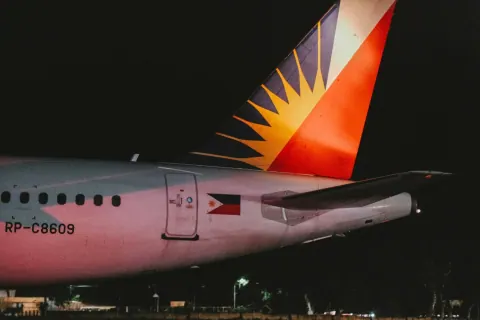
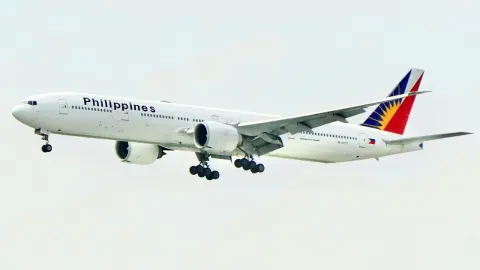
PAL is Asia’s oldest commercial airline, founded in 1941. It currently operates nonstop flights from its hubs in Manila (MNL) and Cebu (CEB) to 29 domestic destinations and 40 international destinations across Asia, North America, Australia, and the Middle East.
When PAL formally enters the alliance (expected sometime in 2027), it will add 31 new destinations to the Oneworld network and open up one of the most distinctive domestic networks in Asia: the Philippine archipelago. Getting from Manila to Siargao, Davao, Cebu, or Palawan will become part of a seamless international journey for Oneworld travelers coming from anywhere in the world.
PAL also brings a fleet that is actively modernizing. In December 2025, it received its first Airbus A350-1000, the first of that aircraft type in Southeast Asia, and expects several more deliveries through 2026 and into 2027. A new nonstop Manila–Chicago route is confirmed to launch on November 9, 2026, further extending long-haul reach.
What Filipinos Gain
This is the part that matters most. Here’s what alliance membership unlocks for Filipino passengers once integration is fully complete.
1. Mabuhay Miles That Go Further
Right now, your Mabuhay Miles mostly live and die on PAL flights or a handful of bilateral partner agreements. Once Oneworld membership is fully active, you’ll be able to earn miles on every flight you take with any of the 16 member airlines, and redeem those miles across the entire alliance network.
That’s a meaningful change. Whether you’re flying to London on British Airways, catching a connection on Japan Airlines, or booking a leg on Qantas to Sydney, your Mabuhay Miles account will accumulate. And when you’re ready to redeem, you’ll have nearly 1,000 destinations to choose from.
2. Access to 700+ Airport Lounges Worldwide
Elite PAL members, specifically top-tier Mabuhay Miles cardholders, will gain Oneworld Priority status, which unlocks access to over 700 premium airport lounges across the alliance network. This includes Oneworld’s own branded lounges at Amsterdam Schiphol and Seoul Incheon, as well as partner lounges in most major international hubs.
For Filipinos who fly frequently for work or leisure, this is one of the most tangible, immediate perks. A lounge during a long layover in Doha, Tokyo, or Sydney isn’t a luxury. It’s a quieter, more comfortable way to travel.
3. Priority Check-In, Boarding, and Baggage Perks Across All Member Airlines
Oneworld elite status is recognized alliance-wide. If you hold top-tier status with PAL, you’ll receive priority check-in lanes, priority boarding, and additional baggage allowances when flying any member airline, not just PAL. The same works in reverse: an American AAdvantage Executive Platinum or Qantas Gold member flying PAL will recognize your airport as their own.
For frequent Filipino travelers connecting across multiple carriers, this removes a lot of the friction that comes with status that vanishes the moment you step onto a non-PAL plane.
4. Smoother Connections and Through-Checked Baggage
One of the most practical benefits of alliance membership is interline baggage agreements. When your journey involves multiple member airlines, your bags check through to your final destination. You don’t have to collect and re-check luggage at every hub.
Combined with coordinated scheduling and smoother connections at major hubs, a trip from Davao to New York, or from Cagayan de Oro to London, becomes a more coherent journey than it is today.
5. More Award Options for Existing Frequent Flyer Members
If you already hold elite status or points in another Oneworld program, say AAdvantage from American Airlines or Qantas Frequent Flyer, you’ll eventually be able to use those to book award seats on PAL. This matters especially for the Filipino diaspora in the United States and Australia, many of whom collect miles on American or Qantas but have limited options for getting home to Manila affordably on points.
What’s in It for the Other Airlines and Countries
Alliance membership is a two-way street. PAL’s addition is good for Oneworld’s other members and their passengers, too.
For American Airlines flyers (particularly the large Filipino-American community in the US), PAL adds meaningful connectivity into the Philippines and onward into the rest of Southeast Asia. American’s CEO Robert Isom, who chairs the Oneworld Governing Board, welcomed PAL’s entry specifically for this reason. Routes like Los Angeles–Manila, San Francisco–Manila, and the upcoming Chicago–Manila nonstop become bookable through AAdvantage award seats once integration is done.
For Qantas frequent flyers in Australia, PAL deepens Southeast Asia coverage. Manila–Sydney and Manila–Melbourne are popular routes that Australians travel frequently, and having PAL inside the alliance makes points redemptions on those routes more accessible.
For Oneworld as a whole, PAL fills a gap. Malaysia Airlines has been the alliance’s only Southeast Asian full member. The Philippines is a high-traffic travel market with a massive, globally dispersed diaspora: OFWs and Filipino communities in North America, the Middle East, Europe, and Australia generate significant demand for international routes. PAL’s domestic network also gives international Oneworld travelers better access to the Philippine archipelago, opening up destinations like Siargao, Palawan, and the Visayas to connection itineraries that weren’t practical before.
How Oneworld Membership Actually Works: The Timeline
It’s important to understand that the announcement on June 6, 2026, was a Memorandum of Understanding, a commitment to join, not a completed membership. The formal entry is expected sometime in 2027. What that means practically:
| Stage | What Happens | When (Approx.) |
|---|---|---|
| MOU Signed | PAL officially committed to joining Oneworld | June 6, 2026 |
| Member-Designate Period | Integration work begins: codeshares, IT systems, fare loading, staff training | 2026–2027 |
| Formal Alliance Entry | PAL becomes a full Oneworld member | Early 2027 |
| Full Benefit Activation | Miles earn/redeem, lounge access, elite reciprocity all live | After formal entry, possibly phased |
Some partnerships are already live or in progress. Qatar Airways launched reciprocal miles earning and redemption with PAL in May 2026. Alaska Airlines added PAL as a partner last year. These early agreements were a preview of what’s now a formal alliance relationship.
Full traveler-facing benefits, including partner award bookings, elite status reciprocity, and lounge access across all member airlines, activate after systems integration is complete. That typically follows the formal entry date by additional months, so patience is part of this.
How to Start Maximizing This as a Filipino Traveler
You don’t have to wait until 2027 to start preparing. Here’s what to do now.
If You Don’t Have a Mabuhay Miles Account Yet
Sign up for Mabuhay Miles now, even if you don’t fly PAL often. Enrollment is free. Once the alliance is live, your account becomes the entry point for earning and redeeming across Oneworld’s entire network. Getting your account active early means you’re ready when the benefits switch on.
If You Already Have Mabuhay Miles
Check your current tier. Oneworld Priority benefits are tied to elite status, not just account ownership. If you’re a Mabuhay Miles Premier, Elite, or Elite Plus member, you’ll have different levels of access to lounge privileges and reciprocal benefits. Understand where you sit before the integration so you know what to expect.
If You Hold Points in Another Oneworld Program
If you already collect AAdvantage (American Airlines) or Qantas Frequent Flyer or Avios (British Airways/Iberia), you’ll eventually be able to use those points to book PAL award seats. Watch for announcements on when award availability opens on PAL through each program. Award seats on PAL have historically been accessible because so few programs could book them. That may change once the alliance is fully live.
The Award Window to Watch
Aviation loyalty experts are flagging this: award availability on PAL routes tends to be relatively open right now, because demand hasn’t caught up yet. Once Oneworld programs can all access PAL seats, competition for award space on popular routes (Manila–Los Angeles, Manila–Sydney, Manila–San Francisco) will increase. If you have points in any Oneworld program and are considering a trip that involves PAL, it’s worth monitoring availability early.
Connecting Flights: What Changes in Practice
This is probably the most underappreciated benefit of alliance membership, and the one that changes day-to-day travel most visibly. Right now, if your trip involves PAL on one leg and a foreign carrier on another, those are treated as two separate bookings: separate check-ins, separate baggage, separate queues, and no recognition of your status on either end. Alliance membership changes that structure.
Here’s what it means concretely, through the kinds of trips Filipinos actually take.
Scenario 1: Manila to Europe (via Doha or London)
PAL does not fly to Europe directly, and has no immediate plans to. That’s worth saying plainly. But the alliance gives you a coordinated path there through partner hubs.
The most natural routing today: Manila (PAL) → Doha (Qatar Airways) → Madrid, London, Paris, Rome, or Amsterdam (Qatar Airways or Iberia).
Qatar Airways already has live reciprocal earning with PAL since May 2026. That partnership is already in motion. Once the full alliance integration is complete, this routing becomes a single cohesive ticket. Your bag gets checked through from Manila to, say, Barcelona. You earn Mabuhay Miles on both the PAL leg and the Qatar Airways leg. If you’re a top-tier Mabuhay member, Qatar’s Al Mourjan lounge in Doha is accessible during your layover. Your boarding priority and baggage allowance carry over from one carrier to the next.
Alternatively: Manila (PAL) → London Heathrow (British Airways) → onward to anywhere in Europe. British Airways’ network from Heathrow is extensive: Paris, Frankfurt, Madrid, Rome, Helsinki via Finnair, and more. London becomes your European gateway, and the PAL–BA connection becomes part of one alliance itinerary.
What this means in practice: before the alliance, you were booking a PAL ticket and a separate Qatar or BA ticket, checking in twice, and hoping your bags made the connection. After integration, a travel agent or the airline’s own booking tool can issue a single through-ticket, your luggage is checked to your final destination, and your status travels with you.
| Route | PAL Leg | Connecting Carrier | Hub |
|---|---|---|---|
| Manila → London | MNL → LHR (direct) | British Airways (Europe onward) | London Heathrow |
| Manila → Madrid / Rome / Paris | MNL → DOH (PAL) | Qatar Airways or Iberia | Doha |
| Manila → Helsinki / Stockholm | MNL → HEL via DOH or HKG | Finnair | Helsinki |
| Manila → Frankfurt / Zurich | MNL → DOH (PAL) | Qatar Airways | Doha |
A note on cost: connecting through Doha on Qatar Airways tends to be one of the more competitive options for Philippines–Europe fares. The alliance relationship doesn’t change fares directly, but it does open award redemption possibilities, meaning Mabuhay Miles or Avios could eventually pay for part or all of this journey.
Scenario 2: US to Philippines (and Back)
This is where the alliance benefit is most immediate and most significant. American Airlines flies to Manila from several US cities, and the relationship between American and PAL has been building for years. American filed to codeshare with PAL as far back as 2020. The alliance formalizes all of that.
Current PAL nonstop routes from the US to Manila: Los Angeles (LAX), San Francisco (SFO), New York JFK, Honolulu (HNL), Seattle (SEA), and the upcoming Chicago O’Hare (ORD) starting November 9, 2026.
For a Filipino-American flying home for the holidays from, say, Dallas or Atlanta, cities without nonstop Manila service. This is what the routing looks like with alliance integration:
Dallas (American Airlines) → Los Angeles (American Airlines) → Manila (PAL). Under alliance rules, this is one journey. One check-in at DFW. Bag checked to MNL. Miles earned on both legs, into whichever program you hold status in, AAdvantage or Mabuhay Miles. If you’re an AAdvantage Executive Platinum, you board the PAL flight with priority. You might have lounge access in LA during the layover.
The same logic works in reverse. A Filipino departing Manila to visit family in Houston or Chicago: board a PAL flight, earn AAdvantage miles on that leg, connect to an American Airlines domestic flight, and your status is recognized end to end.
| Departure City (US) | Connection Point | PAL Leg to Manila |
|---|---|---|
| Los Angeles (LAX) | Direct on PAL | MNL nonstop |
| San Francisco (SFO) | Direct on PAL | MNL nonstop |
| New York (JFK) | Direct on PAL | MNL nonstop |
| Chicago (ORD) | Direct on PAL (from Nov 9, 2026) | MNL nonstop |
| Dallas (DFW) | American Airlines → LAX or SFO | PAL MNL nonstop |
| Atlanta (ATL) | American Airlines → LAX | PAL MNL nonstop |
| Miami (MIA) | American Airlines → LAX | PAL MNL nonstop |
| Boston (BOS) | American Airlines → JFK or LAX | PAL MNL nonstop |
For travelers departing from cities without a direct US-to-Manila PAL flight, the alliance means their domestic American Airlines leg and the PAL transpacific leg are part of a coordinated itinerary, not two separate bookings held together with luck.
Scenario 3: Within the Philippines, Then Onward
This is a scenario that doesn’t get talked about enough: the domestic-to-international connection.
Imagine flying from Davao (PAL) to Manila, then connecting to Tokyo on Japan Airlines, then onward to Frankfurt on Finnair. Before the alliance, the Davao–Manila leg is a separate domestic booking. Your bags don’t automatically transfer. Your status isn’t recognized. You re-check in at Manila.
After full integration: PAL’s domestic Philippine routes become the first leg of a through-Oneworld itinerary. Siargao, Davao, Cagayan de Oro, Puerto Princesa, Iloilo: any destination PAL serves domestically can theoretically be the starting point of a single alliance ticket that ends in Tokyo, Sydney, London, or New York. Your bag goes all the way. Your status travels with you.
This is significant for a country spread across more than 7,600 islands. For the first time, a traveler departing from a smaller Philippine city has access to a fully coordinated international journey on one ticket, rather than stitching together a domestic booking and two separate international ones.
What ‘Coordinated’ Actually Means at the Airport
The practical differences become clearest when things go slightly sideways, which in air travel happens more often than we’d like.
If your PAL flight from Manila arrives late in Doha and you miss your Qatar Airways connection to London, the alliance structure means the second carrier is obligated to rebook you on the next available alliance flight. Your luggage follows. You’re not left arguing with two different airlines about whose fault the delay was, or rebooking out of pocket. One ticket, one set of obligations.
Similarly, if you’re flying from LA to Manila and your American Airlines domestic connection to LAX is delayed, PAL will be aware of the interline situation and can hold or rebook accordingly, within the limits of what the alliance agreement covers. It’s not a guarantee that everything goes perfectly, but it’s a fundamentally better framework than two independent bookings that don’t talk to each other.
What to Watch For
This is a developing story. Over the next 12 to 18 months, watch for:
- PAL’s official formal entry date into Oneworld (announced on oneworld.com and philippineairlines.com)
- Updated Mabuhay Miles earning charts for partner airlines
- Award seat availability opening on PAL through AAdvantage, Qantas Frequent Flyer, and Avios
- New codeshare agreements with member airlines (American, British Airways, JAL, Cathay)
- The November 9, 2026 launch of nonstop Manila–Chicago flights
I’ll update this guide as the picture gets clearer. For now, the most important thing is to have an active Mabuhay Miles account and to know where your frequent flyer points sit.
For over eight decades, Philippine Airlines has connected Filipinos to the world. This is the next chapter of that.
Frequently asked questions
When does PAL officially join Oneworld?
The MOU was signed on June 6, 2026. Formal membership is expected in 2027, though an exact date hasn’t been confirmed yet. Benefits roll out in phases, starting with partnerships that are already live (Qatar Airways miles, Alaska Airlines) and expanding as IT systems are integrated.
Do I need to do anything to my Mabuhay Miles account?
Not immediately. Once PAL formally enters the alliance, Mabuhay Miles will automatically be eligible for earning and redemption across Oneworld carriers. Keep your account active (some programs lapse if unused for 36 months) and make sure your personal details are current.
Will regular economy passengers benefit, or only elite members?
Both, but differently. Anyone flying on PAL or any Oneworld carrier will be able to earn miles that accumulate in one account. Elite benefits, including lounge access, priority check-in, and extra baggage, are tiered by status. The more you fly, the more you unlock. Even at the basic level, having miles that work across 16 airlines instead of one is a genuine improvement.
Which Oneworld airlines already fly to Manila?
Several already serve Manila: American Airlines (Los Angeles, Dallas), Cathay Pacific (Hong Kong), Japan Airlines (Tokyo), Qantas (Sydney, Melbourne, codeshare via Jetstar), Malaysia Airlines (Kuala Lumpur), and Qatar Airways (Doha). British Airways and Finnair connect through other hubs. With PAL in the alliance, these connections become part of a more unified network.
Is this the same as a codeshare agreement?
No. A codeshare is a simpler arrangement where one airline sells seats on another’s flights under its own flight number. An alliance is broader: it includes codeshares, but also shared lounges, reciprocal elite status, mile earning across all carriers, coordinated schedules, and interline baggage agreements. Alliance membership is a much deeper integration than a bilateral codeshare.
What about the other Philippine Airlines routes: Cebu, Davao, Clark?
PAL operates from Cebu (CEB) as a secondary hub and serves domestic routes from Clark, Davao, and other Philippine cities. These domestic routes are expected to be part of the alliance network, making it easier for Oneworld travelers arriving internationally to connect into the archipelago on a single ticket. The specifics of which domestic routes are available as part of Oneworld itineraries will become clearer once codeshare agreements are filed.
Wander deeper,
Merald