
Some links in this guide are affiliate links. If you book through them, I may earn a small commission at no extra cost to you. It's one of the ways Wandering Emerald stays independent. Read the full disclosure.
In this guide
- The Situation in Myanmar Right Now (Updated June 2026)
- Entry Requirements
- Money: Cash Is Everything
- Connectivity: VPN, SIM, and Power
- Safety: What It Actually Feels Like
- Why You Should Hire a Local Guide
- Where to Stay
- What to Eat
- What to Pack
- A 7-Day Itinerary: Yangon, Bagan, and Mandalay
- The Ethical Question
- Frequently asked questions
I want to be upfront: Myanmar (formerly Burma) is not an easy destination to recommend. The country has been in a civil conflict since the 2021 military coup, and the situation is complicated, fluid, and genuinely dangerous in certain areas. I traveled there in October and November 2025, and this guide is my honest account of what travel actually looks like on the ground right now.
Not to glamorize it. Not to scare you away. Just to tell you what I saw, what I learned, and what you need to know if you’re seriously considering going.
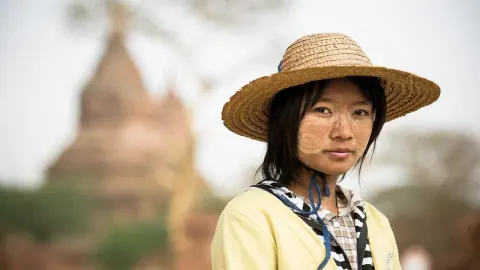
Myanmar holds some of the most extraordinary things I’ve witnessed as a traveler: ancient temples, golden pagodas, and people so warm and resilient it left me quietly in awe. But it demands that you show up prepared, aware, and responsible.
The Situation in Myanmar Right Now (Updated June 2026)
Since the military coup in February 2021, Myanmar has been in an ongoing civil war. The military junta (officially known as the State Administration Council, or SAC) has controlled major cities and key infrastructure, while armed resistance groups have remained active across border regions and rural areas. By early 2026, the junta controlled roughly 60% of Myanmar’s territory, with significant resistance presence elsewhere.
In late 2025, the junta held a multi-phase general election widely criticized by international observers as illegitimate. Voting took place in December 2025 and January 2026, only in areas under junta control, resulting in a military-dominated legislature. In April 2026, junta leader Min Aung Hlaing was inaugurated as president. Most Western governments did not recognize the election as free or fair, and international isolation of the regime continues.
As of 2026, the US State Department maintains a Level 4: Do Not Travel advisory for Myanmar. The UK, Australia, Canada, and the EU have issued similar high-level advisories.
That is the reality you’re traveling into. Before anything else, check the latest advisory from your own government. Buy travel insurance that includes emergency evacuation. This is not a trip where you skip that step.
Which Areas Are Accessible
Despite the advisories, the core tourist circuit, Yangon, Bagan, and Mandalay, remains functional and relatively accessible. Daily life continues in these cities: markets are open, transport runs, hotels operate. Tourist infrastructure is reduced but present.
Beyond these zones, the situation deteriorates sharply. Border states, rural areas, and any region not under firm junta control carry much higher and less predictable risk. Do not venture outside the established tourist circuit.
| Zone | Status | Verdict |
|---|---|---|
| Yangon | Junta-controlled, functioning city | Accessible with caution |
| Bagan | Tourist circuit, reduced capacity | Accessible with caution |
| Mandalay | Junta-controlled, active city | Accessible with caution |
| Inle Lake | Generally calm; verify before visiting | Approach with extra caution |
| Border states (Kachin, Shan, Kayah, etc.) | Active conflict zones | Do not travel |
| Remote rural areas | Volatile, rapidly changing | Do not travel |
Entry Requirements
How to Get In
You can only enter Myanmar by air, through Yangon International Airport (RGN) or Mandalay International Airport (MDL). Land borders are closed to tourists.
Most international flights connect through Bangkok, Singapore, or Kuala Lumpur. The flight from Bangkok to Yangon is under two hours.
Visas
Entry requirements depend on your nationality. Most travelers will need either an e-Visa obtained in advance or a visa on arrival at the airport.
The Myanmar e-Visa is the most reliable option for most travelers. Apply at least one week before your trip to allow for processing. You will need:
- A passport valid for at least 6 months from your date of entry
- A recent passport-sized photograph meeting Myanmar’s photo standards
- Proof of onward or return travel
- Proof of accommodation for the duration of your stay
Apply at the official Myanmar e-Visa portal. Avoid third-party agencies that charge inflated fees.
Money: Cash Is Everything
This is one of the most important practical things to understand before you go. Myanmar’s banking system has been severely disrupted since the coup. ATMs are unreliable, credit cards are rarely accepted, and digital payments are essentially nonexistent for tourists. You are operating in a near-total cash economy.
What Cash to Bring
- Bring US dollars, specifically new, crisp, unmarked $100 bills. This cannot be stressed enough. Money changers across Myanmar are extremely particular about the condition of USD bills. Any fold, ink mark, pen mark, or tear, and they will not accept the note. Bring your cleanest bills.
- Understand there are two exchange rates. The official government rate (what you get at banks or airport counters) is notably lower than the street or market rate. The market rate can run 30-40% better. Your local guide can take you to a trusted money changer in Yangon or Mandalay.
- Change only what you need. You cannot easily convert Myanmar Kyat (MMK) back to USD when you leave.
- ATMs in major cities sometimes work but follow the government rate and are frequently out of service or out of cash. Small towns may have no reliable banking access at all.
| Payment Method | Availability | Notes |
|---|---|---|
| US Dollars (crisp, new) | Widely accepted for exchange | Bring $100s only, unmarked |
| Myanmar Kyat (MMK) | Required for daily spending | Obtain from trusted money changers |
| Credit / Debit Cards | Rarely accepted | Do not rely on these |
| ATMs | Inconsistent | Use only as last resort; government rate applies |
| Digital Payments | Not available for tourists | Not applicable |
Connectivity: VPN, SIM, and Power
Install a VPN Before You Board
Myanmar’s internet is heavily restricted and monitored by the military government. Facebook, Instagram, and Twitter are blocked. During periods of unrest, access can become even more limited. Install a VPN before you leave home, not at the airport and not at the hotel. Once you’re in the country, downloading and setting up a VPN becomes significantly harder.
Most locals use JumpJumpVPN. I used it, and the free version works but drops the connection every 20 minutes or so, which gets tedious. For a more seamless experience, NordVPN, ProtonVPN, and Surfshark are all solid paid options.
Local SIM
Atom Mobile offers acceptable coverage across Yangon, Bagan, and Mandalay. Pick up a SIM on arrival at the airport. You can also purchase one in shops in the city. The locals can help you set it up and top up with prepaid packages. Atom Mobile also offers eSIM and you can purchase it online ahead of your arrival if that is more convenient to you.
Power Outages
Power outages are a real part of daily life here: not constant, but regular, especially outside main city centers. Keep a fully charged power bank at all times. Download offline maps before you fly (Google Maps and Maps.me both work offline).
Safety: What It Actually Feels Like
I felt safe throughout my trip, and I want to be honest about what that means and what it does not.
Yangon, Bagan, and Mandalay are under military control and functioning as urban centers. Daily life is happening. The visible violence, the airstrikes and armed clashes, is occurring in border regions and conflict zones, not in these cities. But “safe” is relative. The tension is real even when it is quiet. The situation can change. The responsibility for staying safe falls largely on you.
Practical Safety Rules
- Stay within Yangon, Bagan, and Mandalay. Do not travel to border states or remote areas.
- Avoid political conversations in public. This protects you and, more importantly, the locals you are talking with.
- Do not photograph soldiers, military vehicles, or checkpoints. The risk is real and not worth any photograph.
- Respect curfew hours. Curfews are generally in effect from midnight to 4 AM in major cities, though hours can change.
- Register your trip with your embassy before you leave.
- Buy travel insurance that covers emergency evacuation. SafetyWing is a solid option for travelers.
What struck me most throughout the trip was not the tension but the people. Warm, generous, and genuinely glad you were there, even amid everything they are living through. That says a great deal about them.
Why You Should Hire a Local Guide
In Myanmar right now, a local guide is not just a convenience. It is a genuine safety asset and the single best decision you can make for this trip.
My guides, Nway Nway and Aung, made the trip what it was. Nway Nway helped me navigate the city, understand which routes to take, and find the quieter, more honest side of Myanmar. She is also a local fashion designer, and before I left, she gave me a handcrafted tote bag she had made herself. One of the more thoughtful moments of the whole trip. She invited me for afternoon tea and insisted on paying: that kind of easy, uncalculated generosity is rare anywhere in the world.
Aung brought a different kind of depth to the experience. He shared stories about the junta, the resistance, and what daily life under the current regime actually looks like. His perspective was grounded, clear-eyed, and the kind of thing you do not get from any travel article. Beyond safety, having guides made the trip mean something.
If you want a recommendation, send me a message, and I will connect you with Nway Nway and her team personally. You can also learn more and visit their website (that I made for them!) here: Myanmar Tour Guide.
Where to Stay
Yangon: The Largest City
I did not stay overnight in Yangon. I explored the city during the day and boarded an overnight VIP bus to Bagan that evening. This is a completely viable move: the overnight buses are comfortable (reclining seats, blankets, charging ports, rest stops), and you save on a night’s accommodation while waking up in Bagan. If you prefer a proper night’s rest before heading north, there are good hotel options in Yangon.
Check Available Hotels in Yangon via Booking.com
Bagan: Ostello Bello Hostel
For solo travelers or anyone who enjoys being around other travelers, Ostello Bello is the place to stay in Bagan. The hostel has a genuinely social atmosphere: the kind where you end up having dinner with strangers and planning a sunrise temple run together by the end of the night.
The staff can arrange e-bikes, tours, and onward transport without any hassle. Clean beds, a pool, daily activities, and two branches: one in New Bagan and one in Nyaung-U.
Book Ostello Bello Bagan via Booking.com
Mandalay: Dragon Phoenix Hotel
After a few days of temple-hopping and long bus rides, Dragon Phoenix Hotel was exactly what I needed: comfortable, clean, and uncomplicated. Reliable Wi-Fi (as reliable as anywhere in Myanmar), a solid buffet breakfast, and staff who helped arrange local transport without any fuss. The location also puts you close to the main attractions.
Book Dragon Phoenix Hotel Mandalay via Booking.com
What to Eat
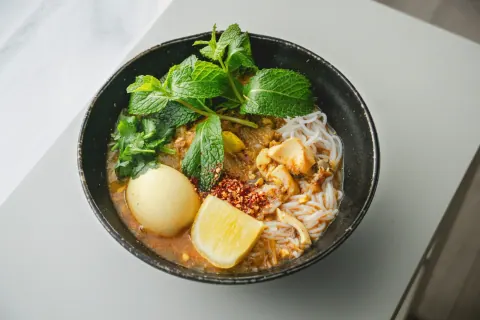
Burmese food draws from its neighbors. Indian, Thai, and Chinese influences all show up, but the cuisine has its own distinct identity. It tends to be spicy, earthy, and oily, with a lot of depth.
| Dish | What It Is | Good For |
|---|---|---|
| Mohinga | Fish-based noodle soup; Myanmar’s national breakfast | Everyone, mild enough for those who prefer less heat |
| Lahpet thoke | Fermented tea leaf salad with peanuts, beans, and garlic | The most distinctively Burmese dish you’ll eat |
| Curry plates | Rice with multiple curries, sides, and condiments | A full meal; heat level varies by restaurant |
| Shan noodles | Rice noodles in a light broth, from Shan State | Lighter option, widely available |
I do not handle heat particularly well, and some dishes pushed my limits. With guidance from Nway Nway, I found plenty of milder options I genuinely loved. Let your guide point you toward local spots rather than restaurants aimed purely at tourists. The food and the experience are both better.
What to Pack
| Item | Why You Need It |
|---|---|
| Crisp US $100s, unmarked | The cash economy requires it |
| Fully charged power bank | Brownouts are regular. Keep it loaded every night. |
| VPN installed and tested | Install at home before you fly. Social media is blocked. |
| Offline maps (Google Maps or Maps.me) | Download before arrival. Useful during outages. |
| Modest clothing (shoulders and knees covered) | Required at religious sites |
| Slip-on shoes | You’ll remove them constantly at pagodas and temples |
| Sunscreen and insect repellent | Essential in Bagan, where you’re outdoors most of the day |
| Small flashlight or headlamp | Useful during power outages |
| Digital and physical copies of passport and insurance | Keep both on you at all times |
| Travel insurance documents (emergency evacuation included) | Non-negotiable for this destination |
A 7-Day Itinerary: Yangon, Bagan, and Mandalay
This route keeps you within the three safest and most accessible tourist zones while giving you a genuine sense of what Myanmar is about. It is the route I would recommend.
Day 1: Arrive in Yangon
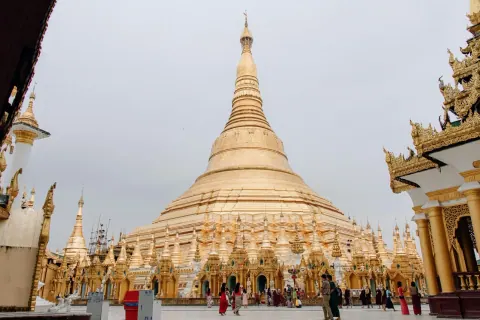
Most international flights into Myanmar connect through Bangkok, Singapore, or Kuala Lumpur. On arrival in Yangon, head straight to Shwedagon Pagoda for the evening. This is Myanmar’s most sacred Buddhist site, and watching the golden stupa catch the last light of the day is one of those moments that stays with you.
Day 2: Explore Yangon, Then Board the Night Bus
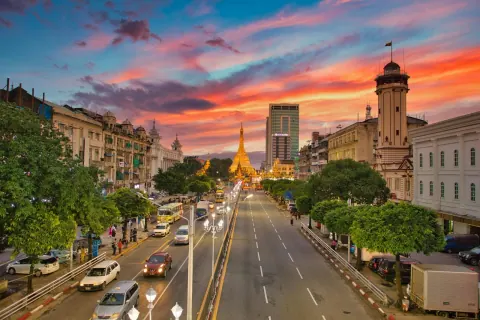
Yangon has a distinct colonial-era character that rewards a day on foot. Visit Sule Pagoda, wander Bogyoke Aung San Market, and walk the old downtown streets. For food, try mohinga and lahpet thoke at a local spot your guide recommends. In the evening, board the overnight VIP bus to Bagan.
Days 3-4: Bagan
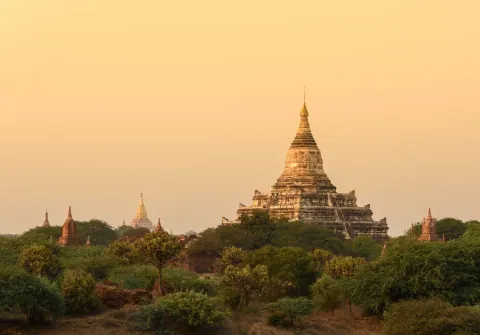
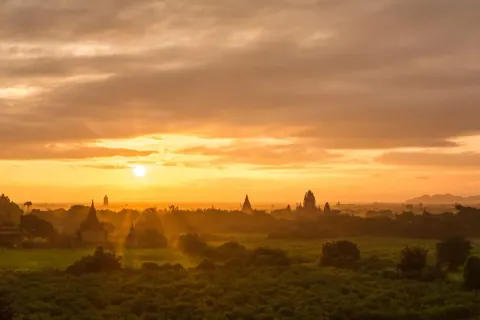
Bagan is the reason most people come to Myanmar. There are over 2,000 surviving temples and pagodas spread across the plains: some grand, some crumbling, some tucked far enough off the path that you’ll have them entirely to yourself. Rent an e-bike and explore without a fixed route.
- Ananda Temple, Dhammayangyi, and Shwezigon Pagoda are worth seeking out.
- You can also ride a horse cart, and the coachman will take you around the ancient temples.
- Check if the hot air balloons are operating. You can buy a ticket for a sunrise ride to experience a majestic bird’s-eye view of Bagan. They are one of the cheapest hot air balloon rides in the world.
- The quieter, lesser-visited temples often hit harder than the famous ones.
- Wake up early at least once for sunrise. The mist rising over thousands of pagodas in the morning light is beautiful in a way that photographs cannot capture properly. You have to be there.
Days 5-6: Mandalay
Take the bus from Bagan to Mandalay, a few hours and manageable. Mandalay is noisier and more chaotic than Bagan, but it has its own depth.
- The Jade Pagoda: a beautiful temple constructed almost entirely of jade, reportedly the only one of its kind in the world. Quieter than the bigger sites and genuinely impressive.
- Kuthodaw Pagoda: An archive made manifest. The entire Tipitaka (the sacred Pali Canon of Theravada Buddhism) is carved into stone tablets surrounding the main pagoda on Mandalay Hill. Each tablet is a page. Walking through them, you sense the scale of the text and the devotion it took to translate faith into stone.
- U Bein Bridge at sunset: a 1.2-kilometer teak bridge stretching across Taungthaman Lake in Amarapura. This is the longest wooden bridge in the world. Walk it at dusk. You can also take a boat ride on Taungthaman Lake. One of the best sunsets you’ll ever see!
- A short boat ride on the Irrawaddy River rounds out the experience well.
Day 7: Head Home
Fly out of Mandalay directly, or take a bus back to Yangon if your onward flight departs from there. Build in buffer time. Transport in Myanmar runs on its own schedule.
The Ethical Question
Traveling to Myanmar right now involves a genuine ethical weight, and anyone considering going should sit with it honestly.
You are entering a country where people are suffering. Where the government in power arrived there through violence. Where your tourist dollars, however carefully you spend them, exist in a complicated space. These are real considerations.
I wrestled with the decision before I went. What helped me decide was the belief that visiting responsibly, spending directly with local guides, restaurants, guesthouses, and small businesses, puts money into the hands of people who need it rather than into government coffers. Avoiding government-run hotels and services is part of that.
That does not make the choice simple. But it does make it considered. If you go:
- Hire a local guide.
- Spend at local restaurants, guesthouses, and small businesses.
- Avoid government-run hotels and services where possible.
- Do not photograph anything that could put locals at risk.
- Be patient, be humble, and pay attention.
Frequently asked questions
Is Myanmar safe for tourists in 2026?
It depends entirely on where you go. Yangon, Bagan, and Mandalay remain accessible for travelers who prepare carefully. Border regions and rural areas experiencing active conflict are not safe and should not be visited. Check your government’s current travel advisory before booking, and buy travel insurance with emergency evacuation coverage.
Do I need a visa to visit Myanmar?
It depends on your nationality. Many travelers can apply for a Myanmar e-Visa online before departure. Check requirements for your specific passport with the Myanmar Ministry of Immigration or your own government’s travel authority, as rules have changed since 2021 and may continue to evolve.
What currency should I bring to Myanmar?
Bring US dollars: specifically crisp, new, unmarked $100 bills. Myanmar operates almost entirely on cash. Credit cards are rarely accepted, and ATMs are unreliable. Exchange dollars with a trusted money changer (your guide can help) to get the market rate rather than the official government rate.
Can I use social media in Myanmar?
Facebook, Instagram, and Twitter are blocked. Install a VPN before you leave home, not at the airport, not at the hotel. Once in the country, setting up a VPN becomes significantly harder. NordVPN, ProtonVPN, and Surfshark all work reliably.
Should I hire a local guide?
Yes, strongly. In Myanmar right now, a guide is a safety asset, not just a convenience. A good guide helps you navigate checkpoints, understand which areas to avoid, find trusted money changers, and reach places and conversations you’d never access on your own. It’s also one of the most direct ways to support local livelihoods.
Is Myanmar open to Western tourists?
Yes, the country is technically open to international visitors arriving by air at Yangon or Mandalay airports. However, most Western governments, including the US, UK, Australia, Canada, and EU member states, have issued Do Not Travel or equivalent advisories. Read your government’s advisory carefully before making any booking.
Have questions about traveling to Myanmar? Send me a message. I read and respond to all of them.
Wander deeper,
Merald